

In one of the announcements that will redefine the power needs of the entire Internet of Things (IoT) and mobile technologies markets, a formidable alliance of technology companies and research centres has today introduced a groundbreaking ambient energy harvesting network.
The technology is known as AetherNet and can wirelessly power low-energy devices up to a distance of 100 feet and essentially eliminate the use of batteries in an enormous range of daily electronics. This innovation can unleash the smart world, wearable health sensors, or an industrial sensor, to form an ecosystem that is always powered.
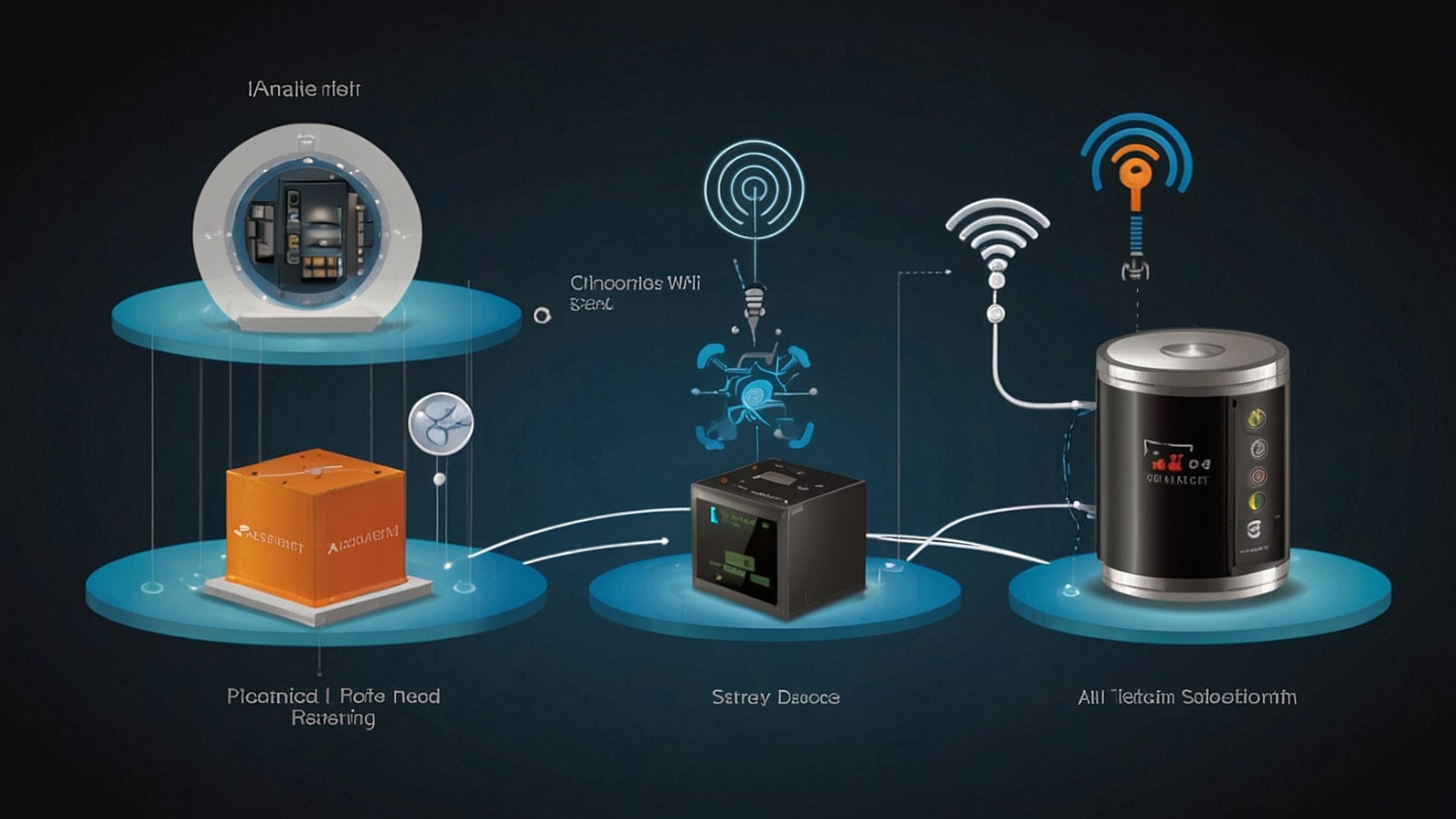
In AetherNet, the fundamental innovation is to intelligently combine and repurpose small portions of ambient energy which is presently being squandered. The network is based on using a set of special routers that capture background radio frequency (RF) signals, Wi-Fi and cellular networks, as well as thermal and kinetic energy.
In contrast to past energy harvesting designs, which were restricted to short distances or dedicated power transmitters, AetherNet is a mesh network which transparently integrates more than one energy source and focuses and steers low-power microwaves to charge devices anywhere within its coverage radius.
The Architecture of the Self-Powering World
AetherNet is founded on a 2-level architecture. The initial layer is made up of the routers of the network. These devices are either built into the current telecommunication infrastructure or available as a single unit but are housed with sophisticated metamaterials, which are highly effective in capturing ambient energy over a wide range of sources. They then transform this energy into a stable, safe, and concentrated beam of power.
The second level is the novel group of appliances that will take this energy. The devices are fitted with a very small paper-thin antenna called a rectenna that can transform the AetherNet router’s microwave energy back to direct current (DC) power.
It is a process that occurs continuously and without any notice, and anyone can have a gadget such as a smart watch, a temperature sensor or an e-ink price tag which will work indefinitely without the need to ever replace a battery or charge it using a wire again. The consortium also showed a range of prototype products, such as smart home sensors, electronic shelf labels, which operated without any internal power source.
Industry Revolutionization and E-Waste Reduction
The potential of this technology is immense in various industries. In health care, it allows the creation of implantable medical monitors that last permanently and do not need surgery every so often due to battery reasons.
Embedded sensors in wearable clothing have the capability to track vital signs in the form of smart clothing, without the bulk and maintenance of a battery pack. Millions of sensors monitoring inventory, conditions, and equipment health can be deployed in logistics and manufacturing, and it can be done at almost no maintenance costs to provide a novel degree of visibility in the operations.
The opportunities for a massive decrease in electronic waste are, perhaps, one of the greatest advantages of the whole world. Millions of tons of battery waste are expected to be produced due to the increase in IoT devices in the next decades. AetherNet offers a bright future of battery-free and sustainable electronics to a considerable segment of the electronics market.
Moreover, it allows the implementation of sensors in very distant or inaccessible sites out of the base of civil infrastructure, to the core of the wilderness, to monitor the environment, without the logistical burden of battery replacement.
Managing the Problems of Scale and Safety
Of course, the announcement has raised the questions of the extent of deployment and, above al,l the safety. The consortium has already overcome such fears through voluminous white papers and third-party authentication.
The levels of power used are incredibly low and fall within international limits of exposure of humans to RF energy. These power beams are not continuous and high-intensity lasers but broad, low-energy fields which are only actively focused on a device when it “requires” a top-up by a low-energy Bluetooth handshake, which makes them efficient and safe.
The deployment of the AetherNet router infrastructure will be the biggest problem. The plan of the consortium is to enter into partnerships with big cities and corporate campuses to establish Aether Zones, densely covered areas.
The long-term goal is to make this technology as ubiquitous as Wi-Fi, and someday, there will be no place without ambient power in a public space, office, or home. The consortium already announced pilot programs in three large global cities, and some multinational companies are expected to start deploying the network in the next eighteen months.
The launch of AetherNet is a turning point in the pursuit of the real seamless and sustainable technology. It breaks the cord and gets rid of the battery, thereby removing one of the inherent limitations that have limited what can be designed, deployed, and impact the environment of the connected world.
Although the full-scale network is still years away from having global reality, the technology today has proven to be real and scalable, and it is a good indication that the day of harvesting power by extracting the air we breathe is no longer a far-fetched dream, but a near reality.
